Literary Works
Oleh Shynkarenko · FictionLiterary Works
My writing explores the intersection of war, technology, propaganda, and human consciousness. I work primarily in the genres of speculative fiction, satire, and dystopia — often blending philosophical inquiry with dark humour and surreal narrative structures to examine how reality is constructed, distorted, and manipulated.
A recurring theme across my work is the transformation of warfare and identity in the modern world, particularly in the context of Ukrainian history and its ongoing confrontation with imperial narratives.
Recurring themes
How to Disappear Completely (2007)
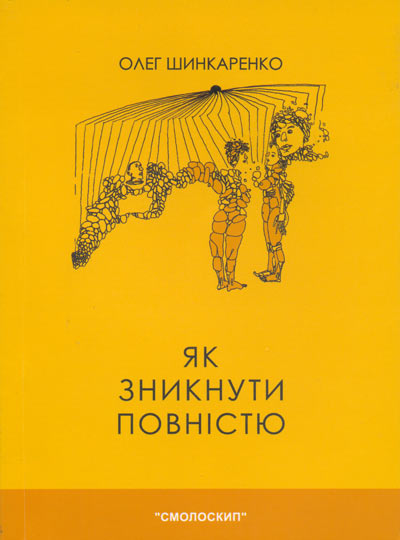
An early collection that marks the starting point of my literary exploration. The stories place ordinary characters inside situations where the rules of reality gradually erode — where identity becomes uncertain, presence becomes optional, and the boundaries between self and world dissolve.
Each story experiments with form and perspective to interrogate what remains when identity itself begins to disappear. The collection blends absurdism, psychological prose, and speculative fiction to challenge conventional narrative expectations. Characters do not fight their dissolution — they observe it, sometimes with detachment, sometimes with quiet terror, creating a cumulative portrait of fragility that feels both intimate and universal.
Kaharlyk (2014)
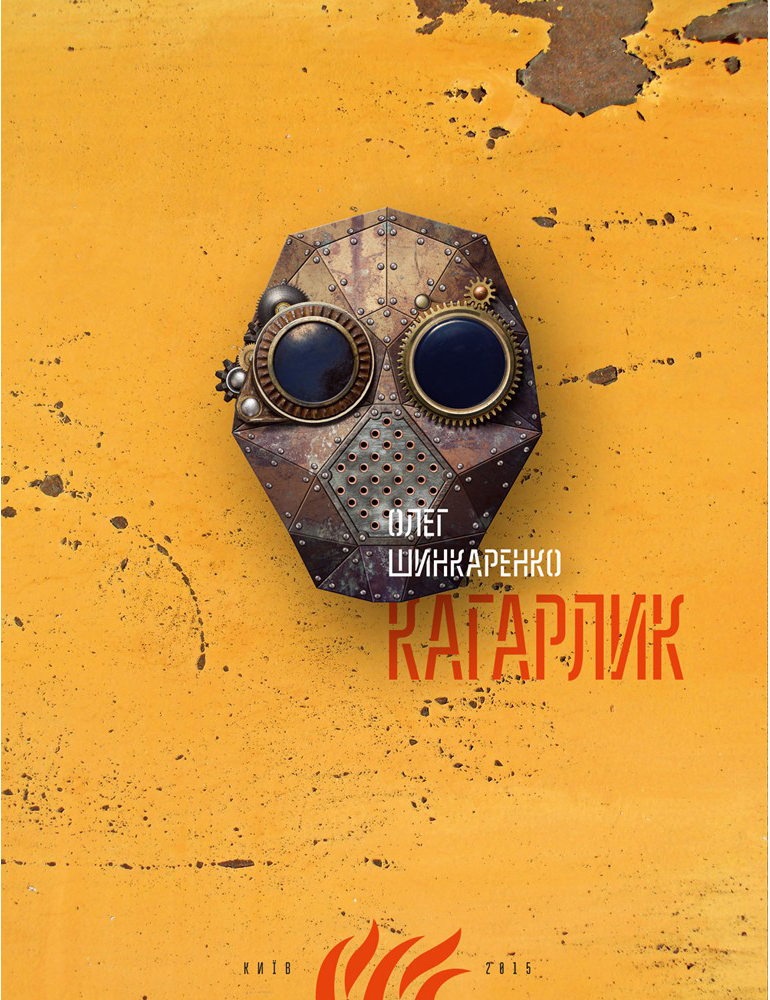
A dystopian novel set in a post-apocalyptic Ukraine where a devastating war has reduced civilisation to ruins and shattered the boundary between time and reality. The protagonist's consciousness has been partially copied into military satellite systems — and he searches for his lost identity and loved one across a world he no longer recognises.
The novel is named after a small Ukrainian town that becomes a symbol of everything destroyed and desperately searched for. It explores how digital immortality — the promise that consciousness can survive catastrophe — is also a trap: a copy of a person is not a person. Memory reconstructed from data is not memory. As the protagonist assembles fragments of his former self from satellite archives and battlefield debris, the reader is left to question whether the self that emerges is the same one that was lost, or something entirely new.
The First Ukrainian Robots (2016)
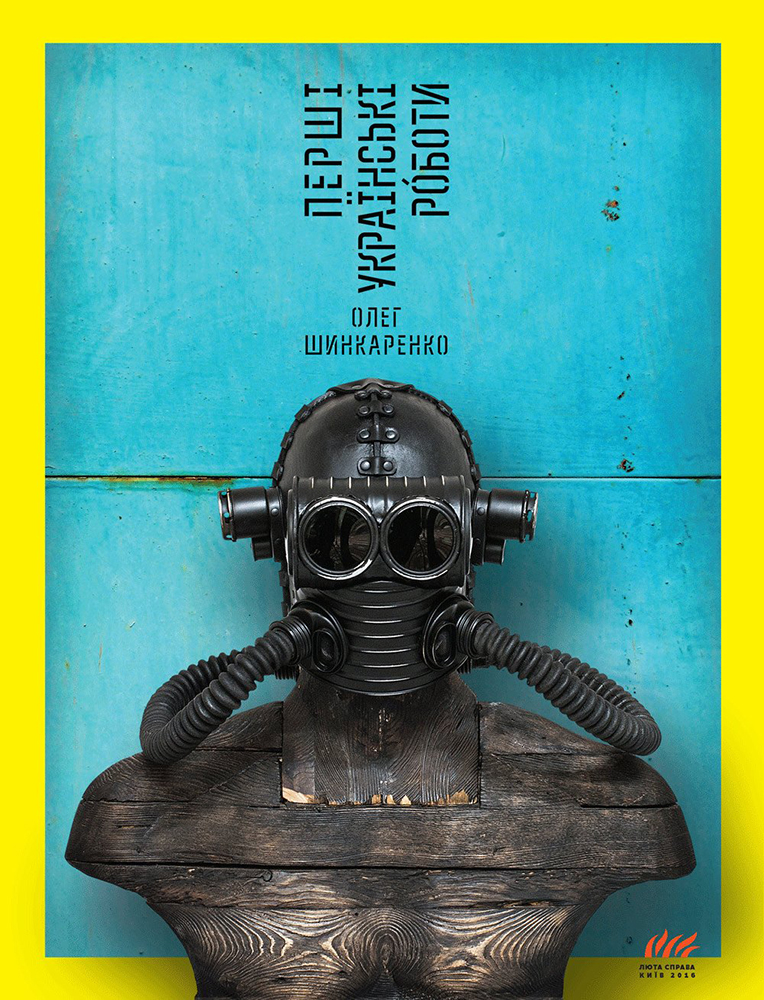
An adventurous and satirical science fiction novel set in a future where AI and robots have fully integrated into society — and have replaced humans on the battlefield. Wars are fought entirely by machines, designed to eliminate casualties. But as robots take over politics, labour, and warfare, resistance movements emerge and ask a question no one anticipated: what happens to humans when they are no longer needed?
Written in 2016 — a decade before the technological reality it describes began to feel inevitable — the novel uses humour and acceleration to explore the moral void at the centre of automated warfare. If soldiers no longer die, does war lose its horror? If robots govern and produce, what purpose do humans serve? The satire cuts in multiple directions: at military logic, at technological optimism, and at the political systems that would cheerfully outsource their cruelest functions to machines to avoid accountability.
Skull (2017)
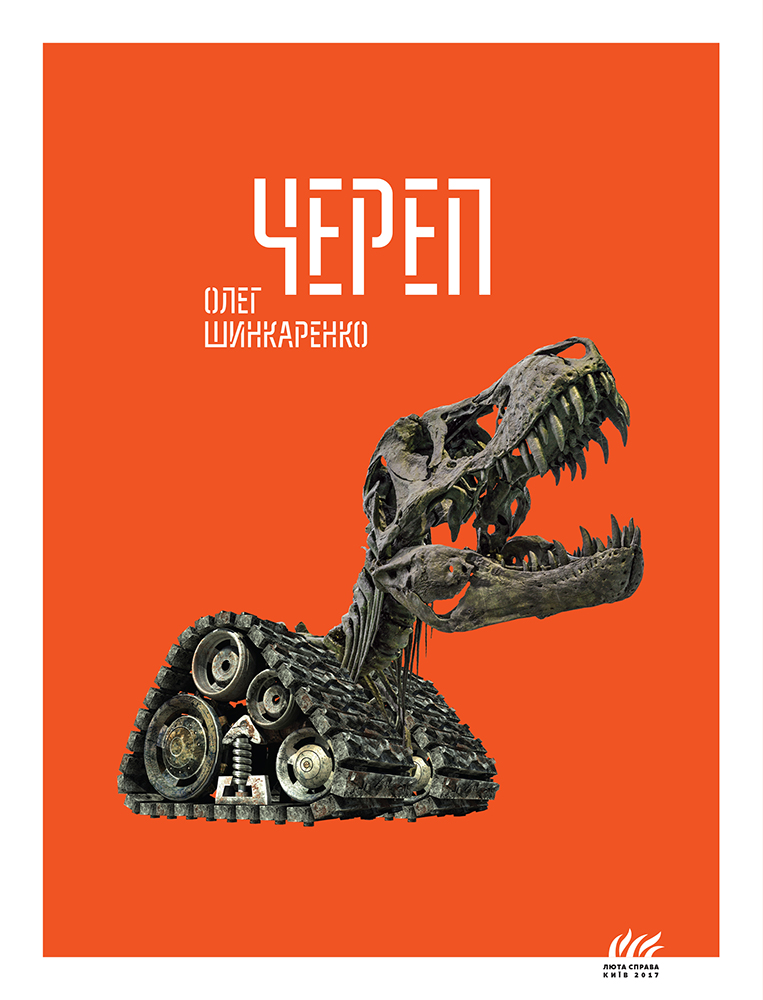
A surreal and grotesque journey into the ideological foundations of the so-called "Russian world." The novel follows characters travelling through a reality distorted by propaganda and violence — a landscape where imperial mythology has replaced truth so completely that brutality feels not only normal but righteous.
Written before the full-scale invasion made its subject matter horrifyingly literal, the novel deconstructs imperial thinking with savage dark humour. Characters lose their humanity not through dramatic moral choices but through gradual absorption into an ideological system that rewards obedience and punishes self-awareness. The grotesque imagery — skulls, mirrors, uniforms that wear their wearers — creates a visual language for the way propaganda hollows people out and fills them with borrowed slogans. The book is both a warning and a diagnosis.
Bandera Distortion (2019)
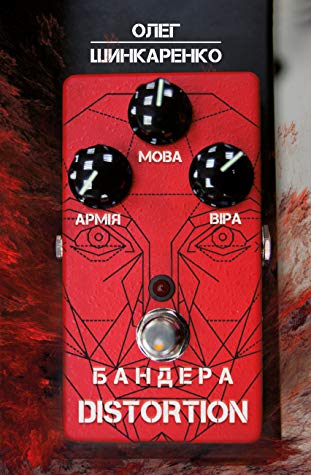
A multi-layered novel that intertwines past and present, reality and hallucination. A journalist's perception becomes increasingly unstable as he investigates events connected to war, contested historical narratives, and the shifting legacy of Stepan Bandera — a figure whose meaning is endlessly refracted through competing political mythologies.
As the journalist moves through war zones, archives, and personal testimonies, each new detail deepens his disorientation. The novel does not resolve the historical questions it raises — it uses their irresolvability as its central subject. Bandera, in the book, is not a person but a distortion field: a name that warps everything around it, causing memory to contradict itself and history to fork into incompatible versions. The result is a meditation on how nations and individuals navigate the gap between what happened and what is remembered — and how dangerous that gap becomes during active conflict.
Books
Overview
Full catalogue
Read full synopses, excerpts, and context for all books at sci-fi-ua.netlify.app.